The Minimalist Fitness Approach: Can Fewer Exercises Really Be Just as Effective?
Quick Answer: A minimalist approach built around 4-6 compound movements (squat, hinge, push, pull, carry, core) trained consistently with progressive overload can produce results comparable to far more complex programs, because most of the total training benefit comes from a small number of well-executed foundational movements rather than exercise variety itself.
The assumption that more exercises automatically means more complete results doesn’t hold up once you look at where actual strength and muscle gains come from.

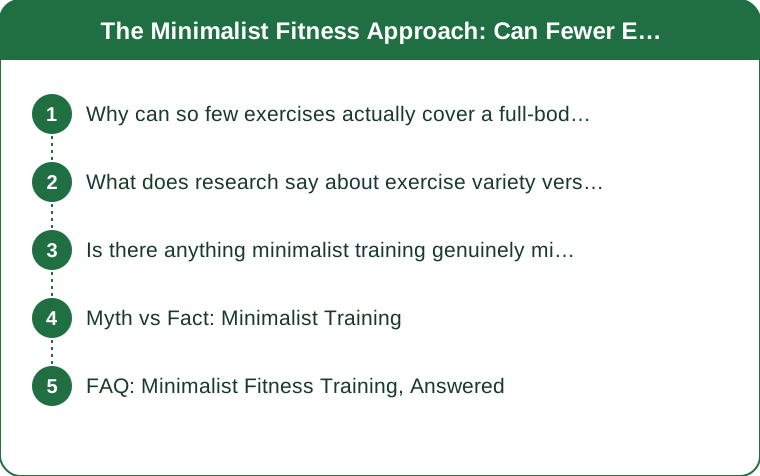
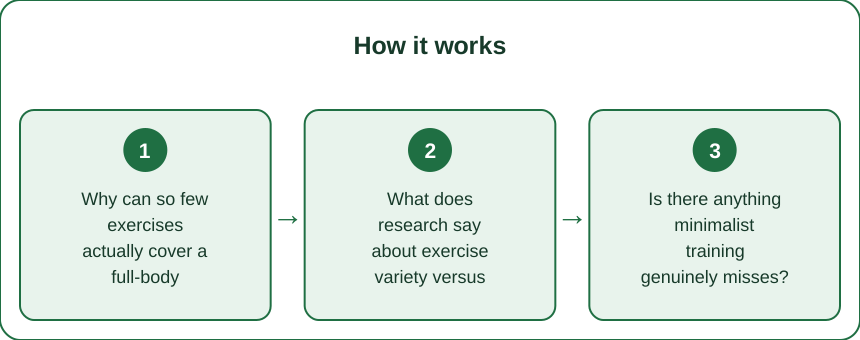
Why can so few exercises actually cover a full-body training need?
Compound movements recruit multiple muscle groups simultaneously — a squat trains quads, glutes, and core together; a row trains back, biceps, and grip. A well-chosen set of 5-6 compounds covers essentially every major muscle group without needing isolation-exercise variety layered on top.
What does research say about exercise variety versus consistency?
Studies comparing high-variety routines against simpler, repeated-movement programs with matched volume and intensity generally show comparable strength and hypertrophy outcomes — consistency in progressive overload predicts results far more reliably than how many different exercises are included.

Is there anything minimalist training genuinely misses?
Specific weak-point or aesthetic-focused development (a particular muscle head, a specific movement pattern for a sport) sometimes benefits from added exercise variety beyond a pure minimalist set. For general strength and fitness goals, though, this gap rarely matters much.
Myth vs Fact: Minimalist Training
Myth: More exercises in a program always means more complete development. Fact: A small set of well-chosen compound movements covers most major muscle groups effectively on its own.
Myth: Minimalist training gets boring and unsustainable long-term. Fact: Many people find a simpler program easier to stick with long-term precisely because it removes decision fatigue about what to do each session.
Myth: You can’t build a physique-focused look with minimalist training. Fact: Compound movements build meaningful, visible muscle broadly — targeted additions can be layered in later if a specific aesthetic goal calls for it.
FAQ: Minimalist Fitness Training, Answered
What are the core movements a minimalist program should include?
A squat pattern, a hinge pattern (deadlift/RDL), a push, a pull, and a core or carry exercise generally cover the essential bases.
How often should these core movements be trained per week?
Most minimalist programs train each pattern 2-3 times weekly, which is enough frequency to drive consistent progressive overload.
Is minimalist training a good fit for complete beginners?
Yes — it’s often an especially good fit for beginners since it simplifies decision-making and builds foundational strength efficiently before adding complexity.
TL;DR:
- 4-6 well-chosen compound movements cover essentially every major muscle group
- Consistency in progressive overload predicts results more than exercise variety does
- Minimalist training often improves long-term adherence by reducing decision fatigue
- Specific aesthetic or weak-point goals can layer in extra exercises later if needed
Fewer exercises isn’t a shortcut that sacrifices results — for most goals, it’s simply training the parts that actually matter most.
Keep Reading
This article is for general informational and styling purposes only. Fit, sizing, and product availability may vary.