Why a Ten-Minute Workout Sometimes Beats a Sixty-Minute One
Quick Answer: A ten-minute session beats an hour-long one when the hour would have been done with low energy, poor form, and heavy phone-checking — intensity and consistency matter more than duration once a baseline of effort is met.
It sounds like a trick, but it isn’t: on the right day, ten focused minutes produces more actual training stimulus than an hour spent half-present.

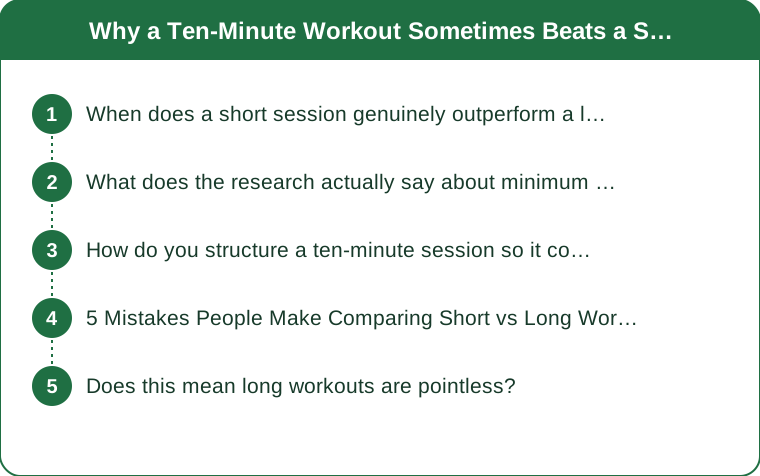
When does a short session genuinely outperform a long one?
On days with low sleep, high stress, or a packed schedule, a long workout typically gets diluted — more rest between sets, more phone checks, lower intensity per movement. Ten minutes with a hard, non-negotiable effort ceiling often produces a comparable training signal because every minute is working, not just present.
What does the research actually say about minimum effective dose?
Strength and cardio adaptations respond primarily to total weekly effort and consistency, not to any single session’s length. A short session performed near your effort limit contributes real stimulus; a long session performed at 60% effort contributes less than its clock time suggests.
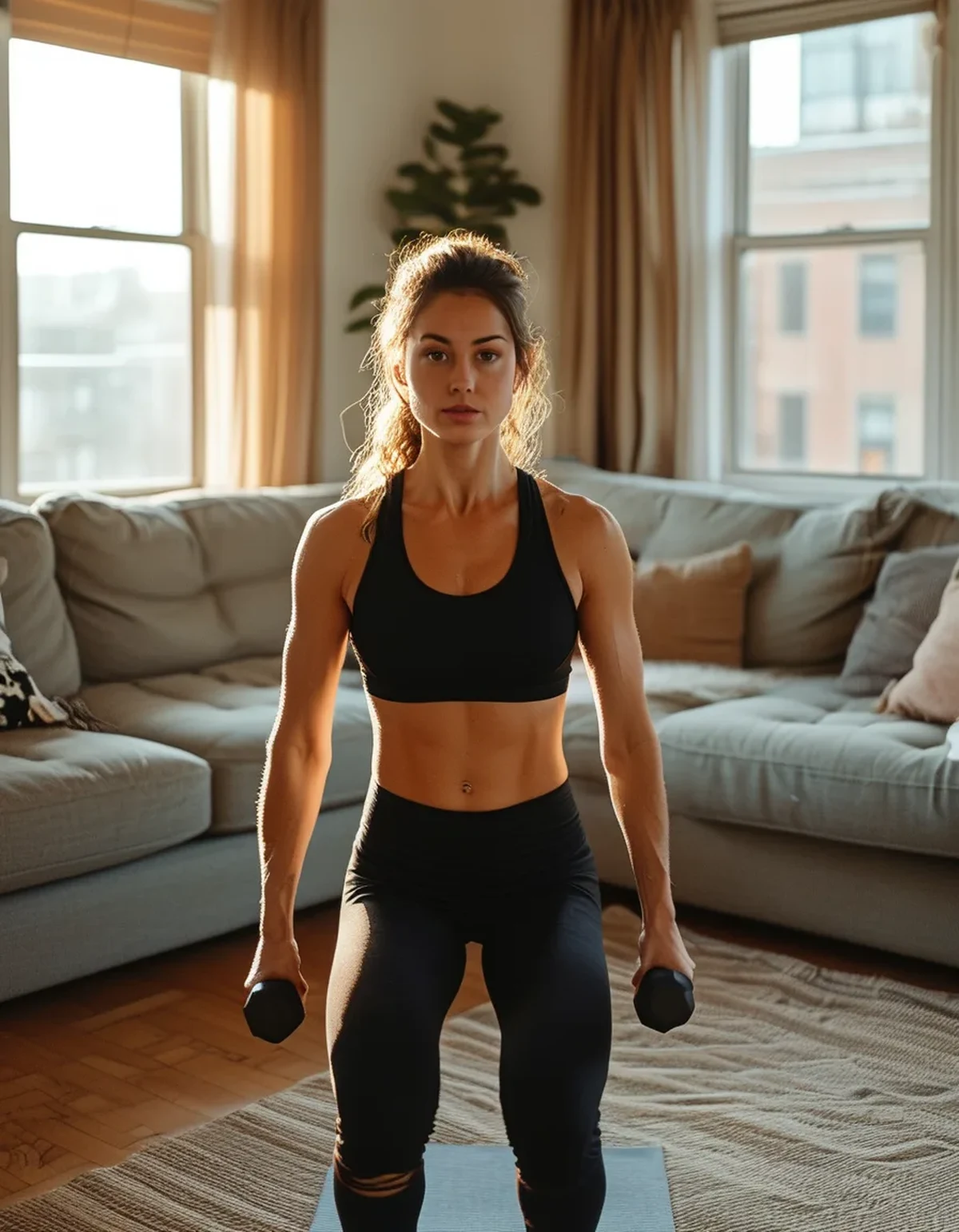
How do you structure a ten-minute session so it counts?
Pick two to three compound movements (squats, push-ups, rows), work in short bursts with minimal rest, and treat the clock as fixed rather than the reps. A hard 10 minutes beats a soft 45 almost every time — the constraint forces focus that an open-ended hour doesn’t.
5 Mistakes People Make Comparing Short vs Long Workouts
- Assuming longer always means more results — intensity is the missing variable in that math. 2) Never testing a genuinely hard short session, so the comparison isn’t fair. 3) Treating the ten-minute version as a lesser workout mentally, which quietly lowers effort. 4) Skipping the short session entirely on busy days instead of doing it. 5) Not tracking total weekly volume, which is what actually predicts progress over a month.
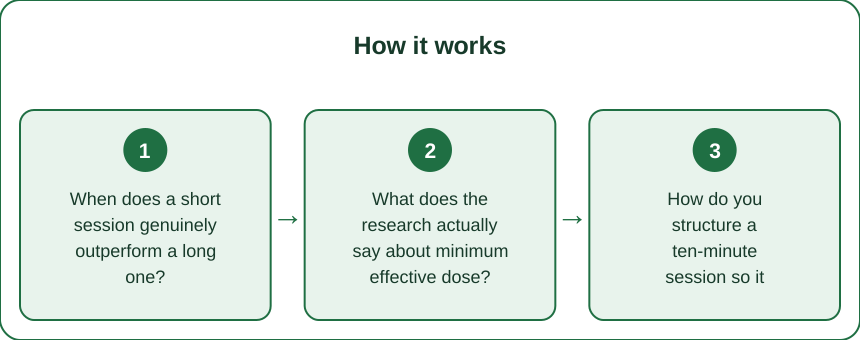
Does this mean long workouts are pointless?
No — longer sessions still matter for skill work, higher training volume, and days when your energy supports it. The point isn’t ‘always short,’ it’s ‘match the format to the day you’re actually having’ instead of defaulting to a long session you won’t execute well.
TL;DR:
- A hard 10 minutes can outperform a soft 60 when energy or focus is low
- Weekly consistency and effort matter more than any single session’s length
- Structure short sessions around 2-3 compound moves with minimal rest
- Long sessions still have their place — match the format to the day
The minimalist move isn’t skipping the workout on a rough day, it’s shrinking it without lowering the effort.
Keep Reading
This article is for general informational and styling purposes only. Fit, sizing, and product availability may vary.