Why Adding Just One More Exercise to a Minimalist Routine Quietly Undoes Its Whole Purpose
A minimalist training program works precisely because it’s minimal, and adding just one more exercise that seems reasonable in isolation can quietly undo the actual mechanism that made the original routine effective in the first place.

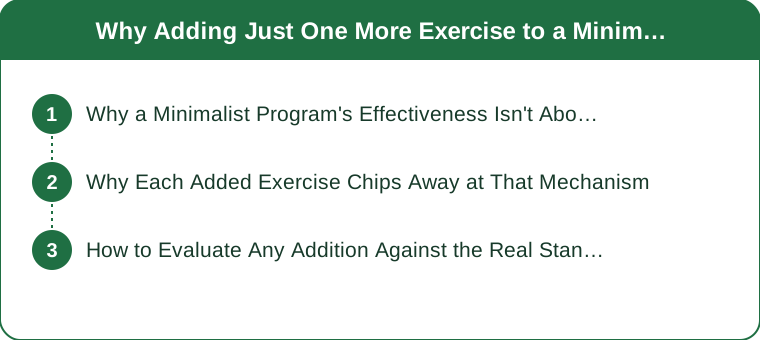
Why a Minimalist Program’s Effectiveness Isn’t About Exercise Selection
The real mechanism: the programs-effectiveness-comes-from-protecting-recovery-capacity-and-keeping-total-time-cost-low-enough-to-sustain-indefinitely (a genuinely minimalist program’s effectiveness coming primarily from protecting total recovery capacity and keeping the time cost low enough to sustain indefinitely, rather than from the specific exercises chosen being uniquely powerful, per the the-minimum-effective-dose-actually-explained-guide logic — the programs-effectiveness-coming-primarily-from-protecting-total-recovery-capacity-and-keeping-time-cost-low-enough-to-sustain-indefinitely-rather-than-from-uniquely-powerful-exercise-selection), and the reframe (the minimal structure itself, not the specific movements in it, being the actual active ingredient)).

Why Each Added Exercise Chips Away at That Mechanism
The creep: the seemingly-reasonable-single-addition-increases-total-recovery-demand-and-time-cost-in-a-way-that-compounds-with-every-future-addition (each seemingly reasonable single addition increasing total recovery demand and session time in a small way that compounds with every future addition, gradually recreating the exact demanding, unsustainable program the minimalist approach was built to avoid, per the a-minimalist-strength-routine-guide logic — the each-seemingly-reasonable-single-addition-increasing-total-recovery-demand-and-session-time-in-a-way-that-compounds-with-every-future-addition-gradually-recreating-the-unsustainable-program-the-minimalist-approach-was-built-to-avoid), and the frame (program creep happening one small, individually justifiable addition at a time, not one big obvious decision)).
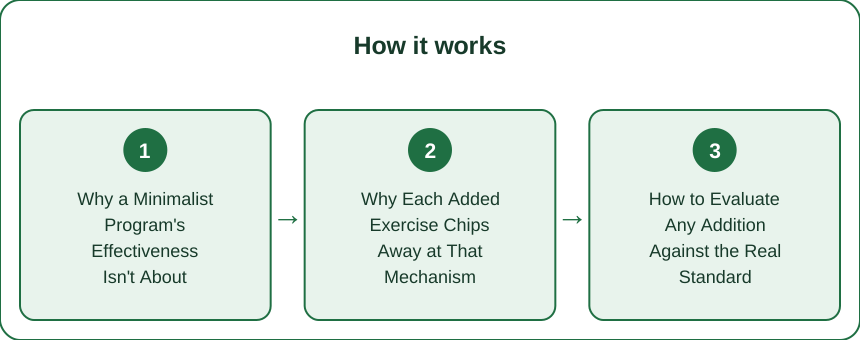
How to Evaluate Any Addition Against the Real Standard
The test: the ask-whether-the-addition-still-fits-within-the-original-time-and-recovery-budget-not-whether-it-sounds-beneficial-on-its-own (asking whether a proposed addition still fits within the program’s original time and recovery budget, rather than asking whether the exercise sounds beneficial in isolation, since almost any exercise can sound beneficial on its own, per the minimalist-full-body-workout-guide logic — the asking-whether-a-proposed-addition-still-fits-within-the-programs-original-time-and-recovery-budget-rather-than-whether-the-exercise-sounds-beneficial-in-isolation), and the frame (the budget, not the individual merit of an exercise, being the actual gatekeeper for whether it belongs in a minimalist routine).
A genuinely minimalist program’s effectiveness comes primarily from protecting total recovery capacity and keeping the time cost low enough to sustain indefinitely, not from the specific exercises chosen being uniquely powerful, which means each seemingly reasonable single addition increases total recovery demand and session time in a way that compounds with every future addition until it quietly recreates the demanding program the approach was built to avoid. Asking whether a proposed addition still fits within the original time and recovery budget, rather than whether it sounds beneficial in isolation, is the real test for whether it belongs.
Keep Reading
This article is for general informational and styling purposes only. Fit, sizing, and product availability may vary.