Why Doing Fewer Exercises Sometimes Produces More Progress Than a Longer Routine
Quick Answer: A shorter routine with fewer exercises often produces better results because it allows more effort, focus, and recoverable volume to concentrate on the movements that matter most, while a longer routine frequently spreads the same total effort thinner across more exercises — meaning total quality of effort per movement, not total exercise count, is what actually drives progress.
Cutting a twelve-exercise routine down to five felt like it should slow progress. Instead, strength and consistency both improved. The mechanism isn’t magic — it’s where the same total effort actually gets concentrated.
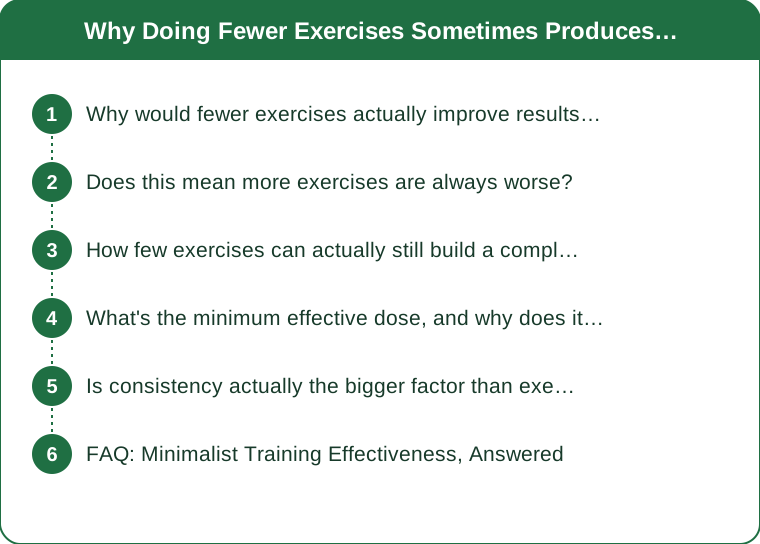
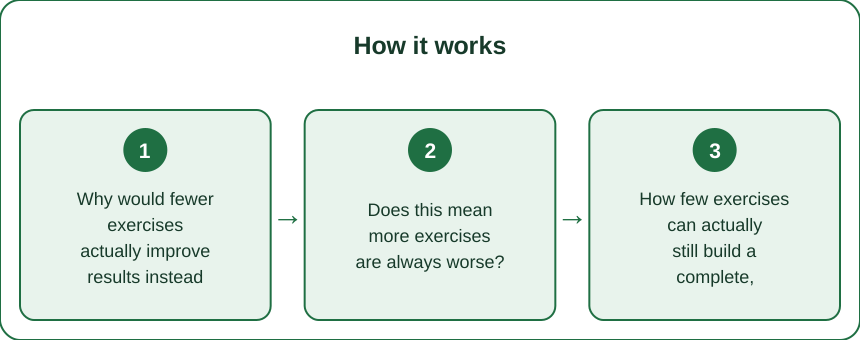
Why would fewer exercises actually improve results instead of limiting them?
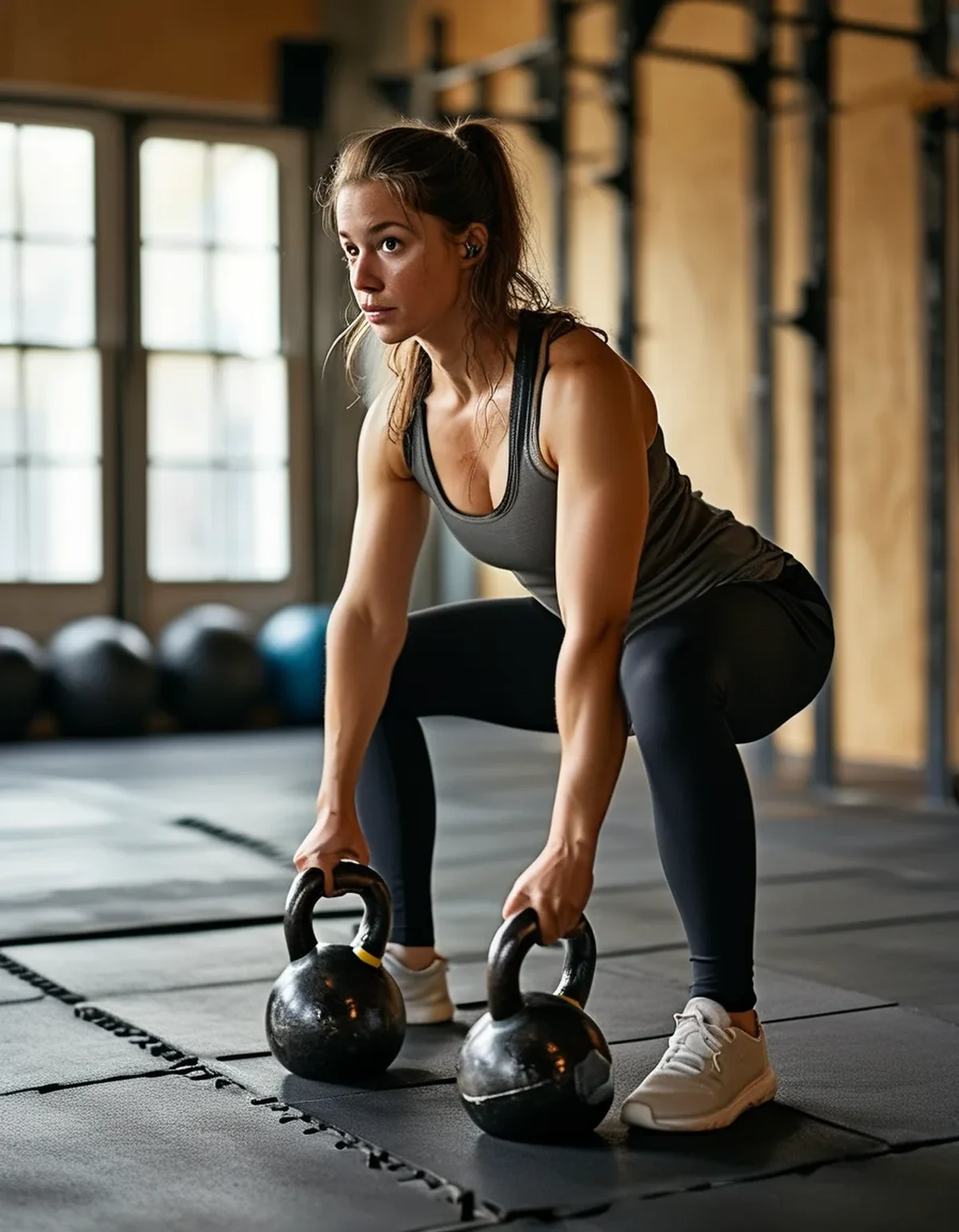
When effort and recoverable training volume are spread across fewer movements, each one can be trained with more focus, better form under less fatigue, and enough volume to actually drive adaptation. A twelve-exercise routine often means each individual movement gets a smaller, less impactful dose, diluting the stimulus that drives real progress.
Does this mean more exercises are always worse?
Not always — it depends on whether the added exercises target genuinely different movement patterns or muscle groups, or whether they’re redundant variations of a similar stimulus. Redundant exercises (three different bicep curl variations, for example) add fatigue and time without meaningfully adding unique training stimulus.
How few exercises can actually still build a complete, effective workout?
A well-chosen set of 4-6 compound movements covering the major movement patterns (squat, hinge, push, pull, and a core or carry pattern) can provide comprehensive training stimulus for most general fitness goals — more exercises beyond this often add time and fatigue without proportionally adding benefit.
What’s the minimum effective dose, and why does it matter here?
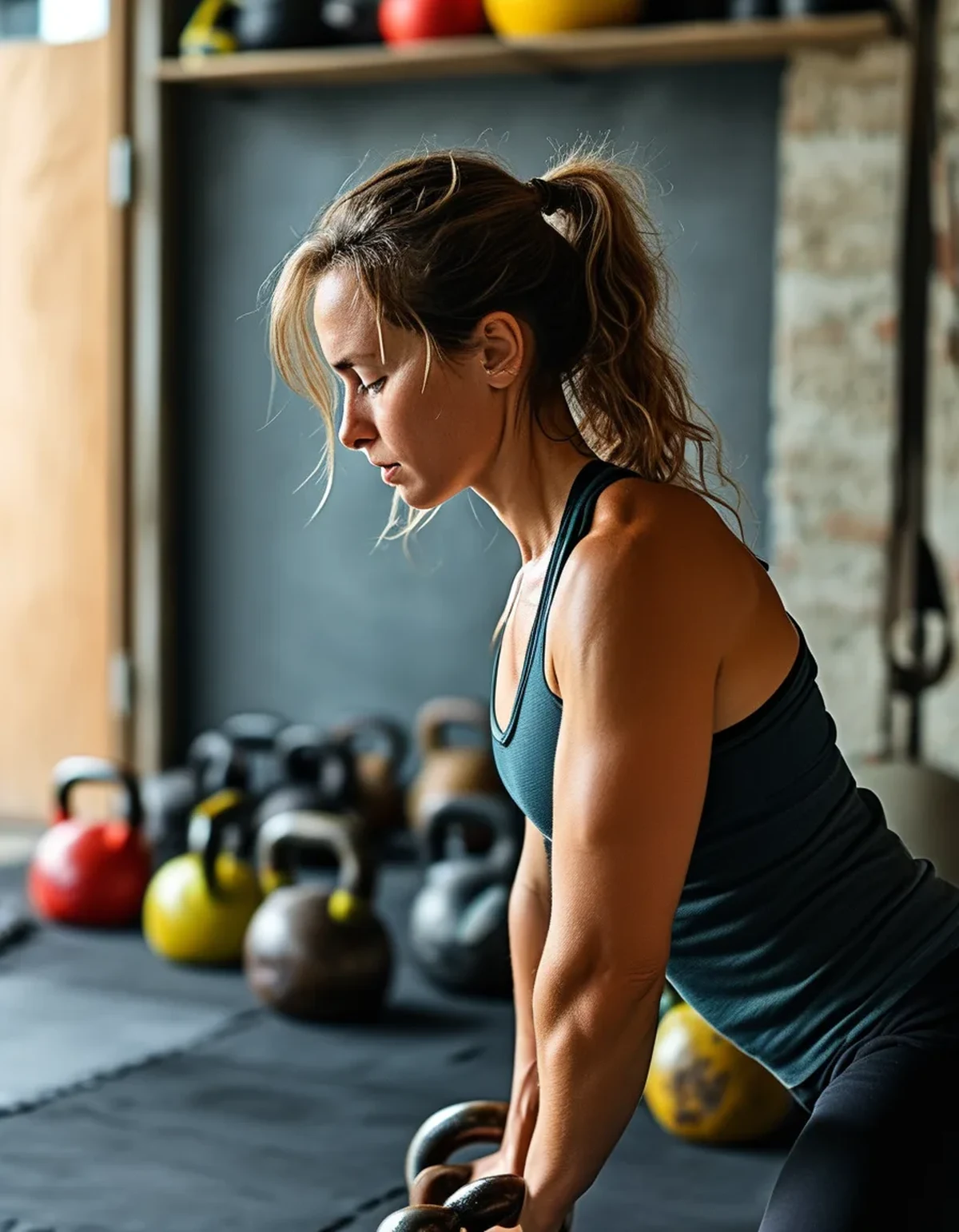
The minimum effective dose is the smallest amount of training volume that still produces a meaningful adaptation — beyond that point, additional volume produces diminishing returns relative to the added fatigue and recovery cost. A minimalist routine deliberately targets that efficient zone rather than maximizing total exercise variety.
Is consistency actually the bigger factor than exercise selection itself?
Often yes — a simpler routine is easier to actually complete consistently week after week, and consistency compounds over months in a way that a more elaborate but frequently-skipped routine can’t match, regardless of how theoretically comprehensive that longer routine is on paper.
FAQ: Minimalist Training Effectiveness, Answered
When does a minimalist routine eventually need one more exercise added?
When a specific movement pattern or muscle group genuinely isn’t being addressed at all by the current set, not simply for variety’s sake or to feel more thorough.
Can a minimalist routine work with only bodyweight exercises?
Yes, particularly for general fitness goals, provided progressive overload is built in through added reps, tempo changes, or more challenging bodyweight variations over time.
Does a minimalist approach work as well for advanced lifters as beginners?
The principle holds at both levels, though advanced lifters typically need somewhat more targeted volume per movement to continue progressing than true beginners do.
TL;DR:
- Concentrating effort on fewer movements often produces more adaptation than spreading it thin across many
- Redundant exercise variations add fatigue and time without adding meaningfully unique training stimulus
- 4-6 well-chosen compound movements can cover most general fitness goals comprehensively
- A simpler routine’s real advantage may be that it’s easier to actually complete consistently over months
Before adding another exercise to your routine, check whether it targets something genuinely missing — or whether it’s just diluting the effort your current movements are already putting to good use.
Keep Reading
This article is for general informational and styling purposes only. Fit, sizing, and product availability may vary.